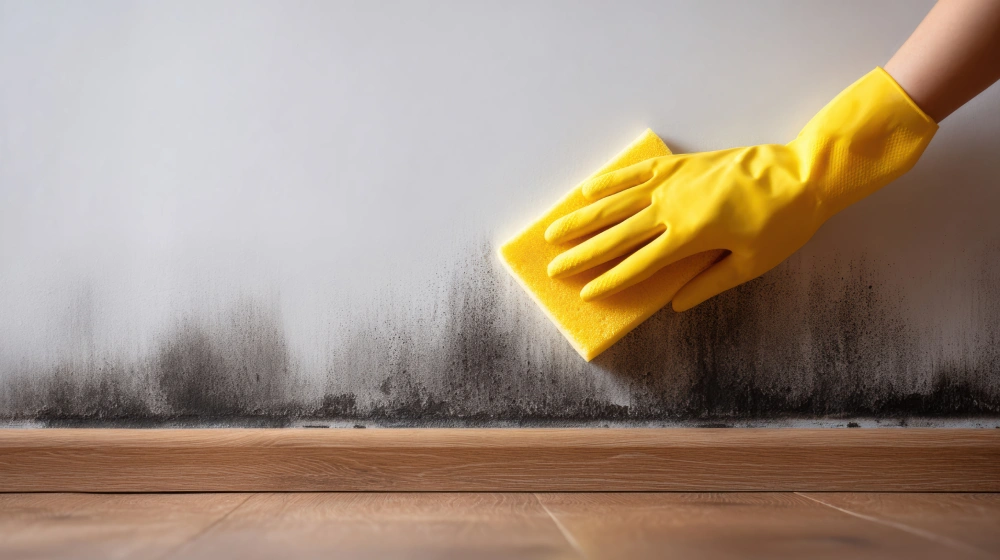
Molds are simple microorganisms that are a natural part of the environment. They can be found almost anywhere, both in homes and outdoors, but usually in damp places like bathrooms and basements, something commonly seen in Brooklyn homes, especially in older properties.
Molds travel through the air. They produce allergens and irritants, so touching or inhaling them may cause allergic reactions such as sneezing, a runny nose, red eyes, and skin rashes.
As a Brooklyn real estate team, The Behfar Team often receives questions about mold during the home-buying and selling process. With our heart-and-soul real estate service and transparent approach, we believe informed clients make better decisions.
One client asked us the following:
“I did a home inspection and the inspector suspected some mold. There’s a lot of discrepancy about mold. I heard once that there’s always mold in the air, so how do you know if it’s the dangerous type of mold? Is it surface mold or deeper mold that causes health issues? Could you give us a little explanation? How do you spot mold in a property? Can you smell it? Can only a home inspector test it? Does it need a special scanner?”
To provide a clear and accurate answer, something we prioritize as trusted real estate brokers in Brooklyn, we turned to the professionals at Whac-A-Mold.
What the Mold Experts Say
“There is always mold in the air, and sometimes that alone is enough to be dangerous. Only by sending a surface or air sample to a lab can you know exactly what type of mold you have. Once identified, you’ll know whether it’s a more toxic type or not.
It can be dangerous whether it’s in the air, on the surface, or deeper in the structure, location does not determine risk. The type and amount of mold are what matter.”
Some contributing factors include excess moisture, wet walls, high indoor humidity, and visible mold growth. In these cases, testing can be skipped and a mold remediation company should be contacted immediately to remove and treat the affected areas.
“There are also situations where there are no visible signs of mold other than how a person feels physically. Smell is not a confirming factor.
To determine if mold is present, a licensed mold assessor must be hired. The assessor will collect air and surface samples, send them to a lab, and take moisture readings to identify the source of water intrusion. A full written report is then prepared outlining what is required to make the home safe again.”
A key point for buyers and sellers in Brooklyn:
“A home inspector typically cannot test for mold. A mold assessor license is required to legally perform mold inspections.”
Why This Matters in Brooklyn Real Estate
For anyone buying or selling a home in Brooklyn, mold can impact:
- Health and safety
- Negotiations and pricing
- Disclosure requirements
- Transaction timelines
At The Behfar Team, we guide clients through inspections with transparency, integrity, and local market knowledge across Midwood, Madison, and Marine Park. Our role is not just to negotiate, but to protect families and help them make confident, informed decisions.
FUN FACT
Some mold is actually beneficial to human health. The most well-known example is Penicillium mold, which produces penicillin. Penicillin is widely used as an antibiotic and is effective because Penicillium naturally kills certain types of bacteria.
That said, beneficial mold belongs in medicine, not inside your home.
Trusted Brooklyn Real Estate Guidance
Whether you are:
- Buying a home in Brooklyn
- Selling a home in Brooklyn
- Navigating inspections in Midwood, Madison, or Marine Park
The Behfar Team delivers an elite, transparent real estate experience rooted in care, integrity, and proven results.